Archive for the ‘wwvb’ Category

Using the WWVB Signal for Time Synchronization

Tuesday, January 26th, 2010

We all rely on the time to keep our days scheduled. Wristwatches, wall clocks and even the DVD player all tell us the time but on occasion, this is not accurate enough, especially when time needs to be synchronized.

There are many technologies that require extremely accurate precision between systems, from satellite navigation to many internet applications, accurate time is becoming increasingly important.

However, achieving precision is not always straight forward, especially in modern computer networks. While all computer systems have inbuilt clocks, these are not accurate time pieces but standard crystal oscillators, the same technology used in other electronic clocks.

The problem with relying on system clocks like this is that they are prone to drift and on a network consisting of hundreds or thousands of machines, if the clocks are drifting at a different rate – chaos can soon ensue. Emails are received before they are sent and time critical applications fail.

Atomic clocks are the most accurate time pieces around but these are large scale laboratory tools and are impractical (and highly expensive) to be used by computer networks.

However, physics laboratories like the North American NIST (National Institute of Standards and Time) do have atomic clocks which they broadcast time signals from. These time signals can be used by computer networks for the purpose of synchronization.

In North America, the NIST broadcasted time code is called WWVB and is transmitted out of Boulder, Colorado on long wave at 60Hz. The time code contains the year, day, hour, minute, second, and as it is a source of UTC, any leap seconds that are added to ensure parity with the rotation of the Earth.

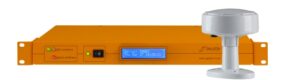
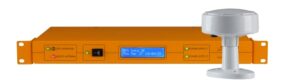
Receiving the WWVB signal and using it to synchronize a computer network is simple to do. Radio reference network time servers can receive this broadcast throughout North America and by using the protocol NTP (Network Time Protocol).

A dedicated NTP time server that can receive the WWVB signal can synchronize hundreds and even thousands of different devices to the WWVB signal ensuring each one is to within a few milliseconds of UTC.

European Time Synchronisation with DCF-77

Sunday, January 3rd, 2010

The DCF 77 signal is a long wave transmission broadcast at 77 KHz from Frankfurt in Germany. DCF -77 is transmitted by Physikalisch-Technische Bundesanstalt, the German national physics laboratory.

DCF-77 is an accurate source of UTC time and is generated by atomic clocks that ensure its precision. DCF-77 is a useful source of time that can be adopted all over Europe by technologies needing an accurate time reference.

Radio controlled clocks and network time servers receive the time signal and in the case of time servers distribute this time signal across a computer network. Most computer network use NTP to distribute the DCF 77 time signal.

There are advantages of using a signal like DCF for time synchronisation. DCF is long wave and is therefore susceptible to interference from other electrical devices but they can penetrate buildings that give the DCF signal an advantage over that other source of UTC time generally available – GPS (Global Positioning System) – which requires a open view of the sky to receive satellite transmissions.

Other long wave radio signals are available in other countries that are similar to DCF-77. In the UK the MSF -60 signal is broadcast by NPL (National Physical Laboratory) from Cumbria while in the USA, NIST (National Institute of Standards and Time) transmit the WVBB signal from Boulder, Colorado.

NTP time servers are an efficient method of receiving these long wave transmissions and then using the time code as a synchronisation source. NTP servers can receive DCF, MSF and WVBB as well as many of them also being able to receive the GPS signal too.

Perfect Time Synchronization for Windows

Wednesday, July 29th, 2009

Most Windows operating systems have an integrated time synchronisation service, installed by default that can synchronise the machine or indeed a network. However, for security reasons, it is highly recommended by Microsoft, amongst others, that an external time source is used.

NTP time servers
securely and accurately receive the UTC time signal from the GPS network or the WWVB radio transmissions (or European alternatives).  NTP time servers can synchronize a single Windows machine or an entire network to within fractions of a second of the correct UTC time (Coordinated Universal Time).

A NTP time server provides precise timing information 24 hours-a-day, 365 days-a-year anywhere on the entire globe. A dedicated NTP time server is the only secure, safe and reliable method of synchronizing a computer network to UTC (Coordinated Universal Time). External to the firewall, an NTP time server does not leave a computer system vulnerable to malicious attacks unlike Internet timing sources via the TCP-IP port.

A NTP time server is not only secure, it receives a UTC time signal direct from atomic clocks unlike Internet timing sources which are really time servers themselves. NTP servers and other time synchronization tools can synchronize entire networks, single PCs, routers and a whole host of other devices. Using either GPS or the North American WWVB signal, a dedicated NTP time server from will ensure all your devices are running to within a fraction of UTC time.

A NTP time server will:

•    Increase network security
•    Prevent data loss
•    Enable logging and tracking of errors or security breaches
•    Reduce confusion in shared files
•    Prevent errors in billing systems and time sensitive transactions
•    Can be used to provide incontestable evidence in legal and financial disputes

WWVB Explained

Thursday, May 7th, 2009

The NTP time server (Network Time Protocol) is an essential tool for keeping networks synchronised. Without adequate synchronization, computer networks can be left vulnerable to security threats, data loss, fraud and may find it impossible to interact with other networks across the globe.

Computer networks are normally synchronised to the global timescale UTC (Coordinated Universal Time) enabling them to communicate efficiently with other networks also running UTC.

Whilst UTC time sources are available across the Internet these are not secure (being outside the firewall) and many are either too far away to provide adequate precision or are too inaccurate to begin with.

The most secure methods of receiving a UTC time source are to use a dedicated NTP Time Server. These devices can receive a secure and accurate time signal either the GPS network (Global Positioning System) available anywhere across the globe with a good view of the sky or through specialist radio transmission broadcast by national physics laboratories.

In the US the National Institute for Standards and Time (NIST) broadcast a time signal from near Fort Collins, Colorado. The signal, known as WWVB can be received all over North America (including many parts of Canada) and provides an accurate and secure method of receiving UTC.

As the signal is derived from atomic clocks situated at the Fort Collins site, WWVB is a highly accurate method of synchronising time and is also secure as a dedicated NTP time server acts as an external source.