Archive for the ‘timing source’ Category

An End to British Summer Time?

Wednesday, August 18th, 2010

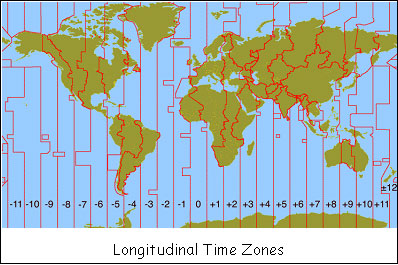
The new UK government is to look again at the perennial debate about changing the clocks during the summer months from GMT (Greenwich Mean Time) to British Summer Time (BST).

While the move is controversial, with many in Scotland in the north of the UK, unwilling to adopt the change due to the longer dark days of winter they experience over the rest of the country – the move would help synchronise Britain with the rest of Europe.

Despite its positing in the European Union, Britain holds a different timescale to the rest of Europe. People from the UK who travel abroad have to advance their watches an hour every-time they travel to mainland Europe.

In the new proposals, daylight saving time will still continue but the standard winter time will be advanced an hour and a further advancement of an hour for the summer – know as double British Summertime – allowing the UK to have the same time as Europe.

However, despite the problems such a change would have to people; technology will not be affected by any alteration in daylight saving time.

UTC Time

Technology, such as computer networks, all use a universal time – UTC (Coordinated Universal Time). UTC is a global timescale, kept true by an international conglomeration of atomic clocks. This means whether you have a UK based computer network, or a one on the other side of the world, to the technologies – the time is the same.

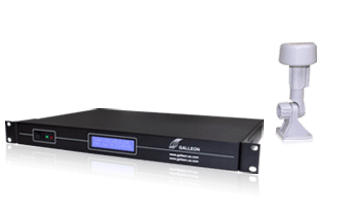
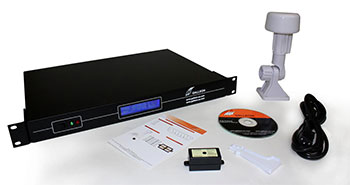
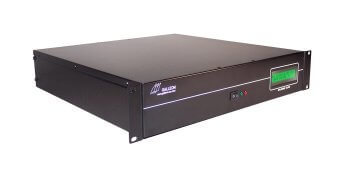
Most technologies receive this time from an atomic clock source using devices known as NTP servers (after the time protocol: Network Time Protocol). NTP servers take advantage of the atomic clocks onboard GPS satellites so they can not only supply an accurate source of time but they can assure that the time source never drifts.

Other methods of getting an atomic clock source of time include using medium wave transmissions broadcast by places like the UK’s National Physical Laboratory (NPL) or the American National Institute for Standards and Time.

NTP servers ensure that no matter where you are in the world the source of time your computers and technology utilise is always Coordinated Universal Time – no matter what the time of year.


Using Windows 7 – Reasons Your Network Still Needs an NTP Server

Thursday, July 29th, 2010

Time synchronisation becomes more and more relevant as we become more dependent on the internet. With so man time sensitive transactions conducted across the globe, from banking and commerce to sending emails, the correct and accurate time is vital in preventing errors and ensuring security.

Increasingly, more and more people are relying on sources of internet time especially with many of the modern flavours of Microsoft’s Windows such as Windows 7 having NTP and time synchronisation abilities already installed.

Windows 7 and Time Synchronisation

Windows 7 will, straight out of the box, attempt to find a source of internet time; however, for a networked machine this does not necessarily mean the computer will be synchronised accurately or securely.

Internet time sources can be wholly unreliable and unsecure for a modern computer network. Internet time has to come through the firewall and as a gap is left for these time codes to come through, malicious software can take advantage of this firewall hole too.

Not only can the accuracy of these devices vary depending on the distance away your network is but also an internet time source very rarely comes direct from an atomic clock.

In fact, most internet time sources are known as stratum 2 devices. This means they connect to another device – a stratum 1 device – namely a NTP time server which gets the time directly from the clock and transmits it to the stratum 2 device.

Stratum 1 NTP time servers

For true accuracy and security, there is no replacement for your network’s own stratum 1 NTP server. Not only are these devices secure, receiving a time source externally to the firewall (often using GPS) but also they receive these signals direct from atomic clocks (The GPS satellite that transmits this signal has an onboard atomic clock that generates the time.

MSF Downtime – No Signal 26/27 July

Wednesday, July 14th, 2010

The UK’s time and frequency signal MSF, provided by the National Physical Laboratory out of Cumbria, will be down for essential maintenance on 26 and 27 July.

The unplanned downtime is to allow essential maintenance to be carried out in safety. The MSF transmitter will stop broadcasting the MSF signal on 26 and 27 July between 08.00 and 20.00 (BST – 07:00 GMT/UTC) although it is possible the maintenance may be finished ahead of schedule in which case the signal will be turned on earlier.

Future maintenance is scheduled for the following times when the signal will also be turned off:

• 9 September 2010 from 10:00 BST to 14:00 BST
• 9 December 2010 from 10:00 UTC to 14:00 UTC
• 10 March 2011 from 10:00 UTC to 14:00 UTC

Problems for Time Synchronisation

Generally, most NTP time servers should be able to maintain a stable time during these brief outages and users of MSF time synchronisation devices should not experience any difficulties with the lack of MSF signal.

However, those users who require high levels of accuracy and reliability and find the MSF outages affect them should perhaps look to a GPS NTP server.

GPS time servers receive their time signals from the GPS network which is available 24 hours a day, 365 days a year and never experiences any outages.

MSF Downtime – No Signal 26/27 July

When Time Servers go Bad

Saturday, May 1st, 2010

“Time is what prevents everything from happening at once,’ said eminent physicist John Wheeler. And when it comes to computers his words couldn’t be any more relevant.

Timestamps are the only method that a computer has to establish if an event has occurred, is meant to occur or shouldn’t be occurring just yet. For a home PC, the computer relies on the inbuilt clock that displays the time on the corner of your operating system, and for most home uses this is satisfactory enough.

However for computer networks that have to communicate with each other, relying in individual system clocks can cause untold problems:

All clocks drift, and computer clocks are no different and problems occur when two machines are drifting at different rates as the time does not match up. This poses a conundrum for a computer as it is unsure of which time to believe and time critical events can fail to occur and even simple tasks like sending an email can cause time confusion on a network.

For these reasons, time servers are commonly used to receive the time from an external source and distribute it around the network. Most of these devices use the protocol NTP (Network Time Protocol) which is designed to provide a method of synchronising time on a network.

However, time servers are only as good as the time source that they rely on and when there is a problem with that source, synchronisation will fail and the problems mentioned above can occur.

The most common cause for time server failure or inaccuracy is the reliance on internet based sources of time. These can neither be authenticated by NTP nor guaranteed to be accurate and they can also lead to security issues with firewall intrusion and other malicious attacks.

Ensuring the NTP time server continues to get a source of highly accurate time is fairly straight forward and is all a matter of choosing an accurate, reliable and secure time source.

In most parts of the world there are two methods that can provide a secure and reliable source of time:

  • GPS time signals
  • Radio referenced time signals

GPS signals are available anywhere on the planet and are based on GPS time which is generated by atomic clocks onboard the satellites.

Radio referenced signals like MSF and WWVB are broadcast on long wave from physics laboratories like NIST and NPL.

Choosing a Source of Time for an NTP Synchronization

Monday, April 26th, 2010

Accurate time is essential in the modern world of internet banking, online auctions and global finance. Any computer network that is involved in global communication needs to have an accurate source of the global timescale UTC (Coordinated Universal Time) to be able to talk to other networks.

Receiving UTC is simple enough. It is available from multiple sources but some are more reliable than others:

Internet Time Sources

The internet is awash with time sources. These vary in reliability and accuracy but some trusted organisations like NIST (National Institute of Standards and Time) and Microsoft. However, there are disadvantages with internet time sources:

Reliability – The demand for internet sources of UTC often means it can be difficult to access them

Accuracy – most internet time servers are stratum 2 devices which means they rely on a source of time themselves. Often errors can occur and many sources of time can be very inaccurate.

Security – Perhaps the biggest issue with internet time sources is the risk they pose to security. To receive a time stamp from across the internet the firewall needs to have an opening to allow the signals to pass through; this can lead to malicious users taking advantage.

Radio Referenced Time Servers.

A secure method of receiving UTC time stamps is available by using a NTP time server that can receive radio signals from labs like NIST and NPL (National Physical Laboratory. Many countries have these broadcasted time signals which are highly accurate, reliable and secure.

GPS Time servers

Another source for dedicated time servers is GPS. The big advantage of a GPS NTP time server is that the time source is available everywhere on the planet with a clear view of the sky. GPS time servers are also highly accurate, reliable and just as secure as radio referenced time servers.

The World’s Atomic Clock Timekeepers

Tuesday, April 20th, 2010

When you set your watch to perhaps the speaking clock or the time on the internet, have you ever wondered who it is that sets those clocks and checks that they are accurate?

There is no single master clock used for the world’s timing but there are a constellation of clocks that are used as a basis for a universal timing system known as UTC (Coordinated Universal Time).

UTC enables all the world’s computer networks and other technology to talk to each other in perfect synchronicity which is vital in the modern world of internet trading and global communication.

But as mentioned controlling UTC is not down to one master clock, instead, a serious of highly precise atomic clocks based in different countries all work together to produce a timing source that is based on the time told by them all.

These UTC timekeepers include such notable organisations as the USA’s National Institute of Standards and Time (NIST) and the UK’s National Physical Laboratory (NPL) amongst others.

These organisations don’t just help ensure UTC is as accurate as possible but they also provide a source of UTC time available to the world’s computer networks and technologies.

To receive the time from these organisations, a NTP time server (Network Time Server) is required. These devices receive the broadcasts from places like NIST and NPL via long wave radio transmissions. The NTP server then distributes the timing signal across a network, adjusting individual system clocks to ensure that they are as accurate to UTC as possible.

A single dedicated NTP server can synchronize a computer network of hundreds and even thousands of machines and the accuracy of a network relying in UTC time from the broadcasts by NIST and NPL will also be highly precise.

The NIST timing signal is known as WWVB and is broadcast from Boulder Colorado in the heart of the USA whilst the UK’s NPL signal is broadcast in Cumbria in the North of England and is known as MSF – other countries have similar systems including the DSF signal broadcast out of Frankfurt, Germany.

GPS as a Timing Reference for NTP servers

Friday, April 16th, 2010

The GPS system is familiar to most people. Many cars now have a GPS satellite navigation device in their cars but there is more to the Global Positioning System than just wayfinding.

The Global Positioning System is a constellation of over thirty satellites all spinning around the globe. The GPS satellite network has been designed so that at any point in time there is at least four satellites overhead – no matter where you are on the globe.

Onboard each GPS satellite there is a highly precise atomic clock and it is the information from this clock that is sent through the GPS transmissions which by triangulation (using the signal from multiple satellites) a satellite navigation receiver can work out your position.

But these ultra precise timing signals have another use, unbeknown to many users of GPS systems. Because the timing signals from the GPS atomic clocks are so precise, they make a good source of time for synchronising all sorts of technologies – from computer networks to traffic cameras.

To utilise the GPS timing signals, a GPS time server is often used. These devices use NTP (Network Time Protocol) to distribute the GPS timing source to all devices on the NTP network.

NTP regularly checks the time on all the systems on its network and adjusts it accordingly if it has drifted to what the original GPS timing source is.

As GPS is available anywhere on the planet it provides a really handy source of time for many technologies and applications ensuring that whatever is synchronised to the GPS timing source will remain as accurate as possible.

A single GPS NTP server can synchronize hundreds and thousands of devices including routers, PCs and other hardware ensuring the entire network is running perfectly coordinated time.

Synchronizing a PC to an Atomic Clock

Wednesday, April 7th, 2010

Atomic clocks are without doubt the most accurate time pieces on the face of the planet. In fact the accuracy of an atomic clock in incomparable to any other chronometer, watch or clock.

While an atomic clock will not lose even a second in time in thousands upon thousands of years, you’re average digital watch will perhaps lose a second in just a few days which after a few weeks or months will mean your watch is running slow or fast by several minutes.

The same can also be said for the system clock that controls your computer the only difference is that computers rely even more heavily on time than we ourselves do.

Nearly everything a computer does is reliant on timestamps, from saving work to performing applications, debugging and even emails are all reliant on timestamps which can be a problem if the clock on your computer is running too fast or slow as errors can quite often occur, especially if you are communicating with another computer or device.

Fortunately, most PCs are easily synchronized to an atomic clock meaning they can be accurate as these powerful time keeping devices so any tasks performed by your PC can be in perfect synchronicity with whatever device you are communicating with.

In most PC operating systems an inbuilt protocol (NTP) allows the PC to communicate with a time server that is connected to an atomic clock. In most versions of Windows this is accessed through the date and time control setting (double clicking the clock in the bottom right).

However, for business machines or networks that require secure and accurate time synchronization, online time servers are just not secure or accurate enough to ensure your network is not vulnerable to security flaws.

However, NTP time servers that receive the time direct from atomic clocks are available that can synchronize entire networks. These devices receive a broadcasted timestamp distributed by either national physics laboratories or via the GPS satellite network.

NTP servers enable entire networks to all have exactly synchronized time which is as accurate and secure as is humanly possible.

NTP Time Servers – Keeping Technology Precise

Friday, March 26th, 2010

Atomic clocks are much underrated technologies their development has revolutionised the way we live and work and has made possible technologies that would be impossible without them.

Satellite navigation, mobile phones, GPS, the internet, air traffic control, traffic lights and even CCTV cameras are reliant on the ultra precise timekeeping of an atomic clock.

The accuracy of an atomic clock is incomparable to other time keeping devices as they don’t drift by even a second in hundreds of thousands of years.

But atomic clocks are large sensitive devices that need team of experienced technicians and optimum conditions such as those found in a physics laboratory. So how do all these technologies benefit from the high precision of an atomic clock?

The answer is quite simple, the controllers of atomic clocks, usually national physics laboratories, broadcast via long wave radio the time signals that their ultra precise clocks produce.

To receive these time signals, servers that use the time synchronization protocol NTP (Network Time Protocol) are employed to receive and distribute these timestamps.

NTP time servers, often referred to as network time servers, are a secure and accurate method of ensuring any technology is running accurate atomic clocks time. These time synchronization devices can synchronise single devices or entire networks of computers, routers and other devices.

NTP servers that use GPS signals to receive the time from the atomic clock satellites are also commonly used. These NTP GPS time servers are as accurate as those that receive the time from physics laboratories but use the weaker, line of sight GPS signal as their source.

Technologies that rely on Atomic Clocks – part two

Sunday, March 21st, 2010

GPS is not the only technology that is dependent on atomic clocks. The high levels of accuracy that are supplied by atomic clocks are used in other crucial technologies that we take for granted everyday.

Air traffic Control Not only are all aeroplanes and airliners now equipped with GPS to enable pilots and ground staff to know their exact location but atomic clocks are also used by air traffic controllers who need precise and accurate measurements and time between planes.

Traffic Lights and Road Congestion Systems – Traffic lights are another system that relies on atomic clock timing. Accuracy and synchronization is vital for traffic light systems as small errors in synchronization could lead to fatal accidents.

Congestion cameras and other systems such as parking metres also use atomic clocks as a basis of their timekeeping as this prevents any legal issues when issuing penalty notices.

CCTV – Closed circuit television is another large scale user of atomic clocks. CCTV cameras are often used in the fight against crime but as evidence they are ineffective in a court of law unless the timing information on the CCTV camera can be proved to be accurate. Failure to do so could lead to criminals escaping prosecution because despite the identification by the camera, proof that it was at the time and date of the offence can’t be clarified without accuracy and synchronization.

Internet – Many of the applications we now entrust to the internet are only made possible thanks to atomic clocks. Online trading, internet banking and even online auction houses all need accurate and synchronized time.

Imagine taking your savings from your bank account only finding that you can withdraw them again because another computer has a slower clock or imagine bidding on an internet auction site only to have your bid rejected by a bid that came before yours because it was made on a computer with a slower clock.

Using atomic clocks as a source for time is relatively straight forward for many technologies. Radio signals and even the GPS transmissions can be used as a source of atomic clock time and for computer systems, the protocol NTP (Network Time Protocol) will ensure any sized network will be synchronized perfectly together. Dedicated NTP time servers are used throughout the world in technologies and applications that require precise time.