Archive for the ‘time server’ Category

Network Time Protocol – Time Synchronisation Made Easy

Wednesday, November 18th, 2009

One of the most important aspects of networking is keeping all devices synchronised to the correct time. Incorrect network time and lack of synchronisation can play havoc with system processes and can lead to untold errors and problems debugging.

And failing to ensure devices are continually checked to prevent drift can also lead to a synchronised network slowly becoming unsynchronised and leading to the kinds of problems aforementioned.

However, ensuring a network not only has the correct time but that that time is not drifting is achieved using the time protocol NTP.

Network Time Protocol (NTP) is not the only time synchronisation protocol but it is by far the most widely used. It is an open source protocol but is continually updated by a large community of Internet time keepers.

NTP is based around an algorithm that can work out the correct and most accurate time from a range of sources. NTP allows a single time source to be used by a network of hundreds and thousands of machines and it can keep each one accurate to that time source to within a few milliseconds.

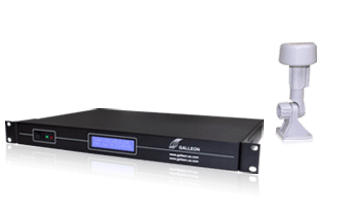
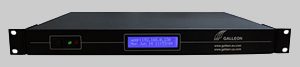
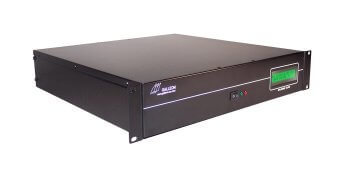
The easiest way of synchronising a network with NTP is to use a NTP time server, also known as a network time server.

NTP servers use an external source of time, either from the GPS network (Global Positioning System), or from broadcasts from national physics laboratories such as NIST in the US or NPL in the UK.

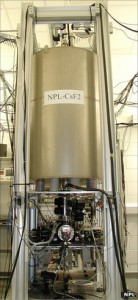
These time signals are generated by atomic clocks which are many times more accurate than the clocks on computers and servers. NTP will distribute this atomic clock time to all devices on a network it will then keep checking each device to ensure there is no drift and correcting the device if there is.

Seven Reasons why your Network needs a Time Server

Wednesday, October 14th, 2009

Time servers, often referred to as NTP time servers after the protocol (Network Time Protocol) used to distribute time are an increasingly important part of any computer network. The NTP server receives a timing signal from an accurate source (such as an atomic clock) and then distributes it to all devices on the network.

However, despite the increasing importance of these time synchronisation devices, many network administrators still fail to accurately synchronise their networks and can leave their entire computer system vulnerable.

Here are seven reasons why a NTP time server is a crucial piece of equipment for YOUR network:

• Security: NTP servers use an external source of time and don’t rely on an open firewall port. An unsynchronized server will also be vulnerable to malicious users who can take advantage of time differences.

• Error logging: failing to adequately synchronize a computer network may mean that it is near impossible to trace errors or malicious attack, especially if the times on the log files from different machine do not match.

• Legal Protection: Not being able to prove the time can have legal implications if somebody has committed fraud or other illegal activity against your company.

• Accuracy: NTP Time Servers ensure that all networked computers are synchronized automatically to the exact time throughout your network so everybody in your company can have access to the exact time.

• Global Harmony: A global timescale known as UTC (Coordinated Universal Time) has been developed to ensure that systems across the globe can run the exact same time. By utilising a NTP server not only will every device on you network be synchronised together but your network will be synchronised with every other network on Earth that is hooked up to UTC.

• Control: With a NTP server you have control of the configuration. You can allow automatic changes each spring and autumn for daylight saving time or set your server time to be locked to UTC time only – or indeed, any time zone you choose.

• Automatic update of time. No user intervention required, a NTP time server will account for leap seconds and time zones ensuring trouble free synchronisation.

Life Without the Atomic Clock

Saturday, October 10th, 2009

When we consider the most important inventions of the last 100 years, very few people will think of an atomic clock. In fact, if you ask somebody to come up with a top ten of inventions and innovations its doubtful if the atomic clock would figure at all.

Its probably not hard to imagine what people think of as the most life-changing inventions: the Internet, mobile phones, satellite navigation systems, media players etc.

However, nearly all theses technologies rely on accurate and precise time and they would not function without it. The atomic clocks lies at the heart of many of the modern innovations, technologies and applications associated with them.

Let’s take the Internet as an example. The Internet is, in its simplest form, a global network of computers, and this network spans time zones and countries. Now consider some of the things we use the Internet for: online auctions, Internet banking or seat reservation for example. These transactions could not be possible with precise and accurate time and synchronisation.

Imagine booking a seat on an airline at 10am and then another customer tries to book the same seat after you on a computer with a slower clock. The computer only has the time to go on so will consider the person who booked after you to have been the first customer because the clock says so! This is the reason any Internet network that requires time sensitive transactions is connected to a NTP server to receive and distribute an atomic clock time signal.

And for other technologies the atomic clock is even more crucial. Satellite navigation (GPS) is a prime example. GPS (Global Positioning System) works by triangulating atomic clock signals from satellites. Because of the high velocity of radio waves an inaccuracy of 1 second could see a sat-nav device out by 100,000 km.

Other technologies too from mobile phone networks to air traffic control systems are completely reliable on atomic clocks demonstrating how underrated this technology is.

Keeping Your Network Secure –Beginners Guide

Wednesday, September 30th, 2009

Network security is vitally important for most business systems. Whilst email viruses and denial-of-service attacks (DoS attack) may cause us headaches on our home systems, for businesses, these sorts of attacks can cripple a network for days – costing businesses hundreds of millions each year in lost revenue.

Keeping a network secure to prevent this type of malicious attack is usually of paramount importance for network administrators, and while most invest heavily in some forms of security measures there is often vulnerabilities inadvertently left exposed.

Firewalls are the best place to begin when you are trying to develop a secure network. A firewall can be implemented in either hardware or software, or most commonly a combination of both. Firewalls are used to prevent unauthorized users from accessing private networks connected to the Internet, especially local intranets. All traffic entering or leaving the intranet pass through the firewall, which examines each message and blocks those that do not meet the specified criteria.

Anti-virus software works in two ways. Firstly it acts similarly to a firewall by blocking anything that is identified in its database as possibly malicious (viruses, Trojans, spyware etc). Secondly Anti-virus software is used to detect, and remove existing malware on a network or workstation.

One of the most over-looked aspects of network security is time synchronization. Network administrators either fail to realise the importance of synchronization between all devices on a network. Failing to synchronize a network is often a common security issue. Not only can malicious users take advantage of computers running at different times but if a network is struck by an attack, identifying and rectifying the problem can be near impossible if every device is running on a different time.

Even when a network administrator is aware of the importance of time synchronization they often make a common security mistake when attempting to synchronize their network. Instead of investing in a dedicated time server that receives a secure source of UTC (Coordinated Universal Time) externally from their network using atomic clock sources like GPS, some network administrators opt to use a shortcut and use a source of Internet time.

There are two major security issues in using the Internet as a time server. Firstly, to allow the time code through the network a UDP port (123) has to be left open in the firewall. This can be taken advantage of by malicious users who can use this open port as an entrance to the network. Secondly, the inbuilt security measure used by the time protocol NTP, known as authentication, doesn’t work across the Internet which means that NTP has no guarantee the time signal is coming from where it is supposed to.

To ensure your network is secure isn’t it time you invested in an external dedicated NTP time server?

Time Server Basic Questions Answered

Wednesday, August 5th, 2009

What is a time server?

A time server is a device that receives and distributes a single time source across a computer network for the purposes of time synchronization. These devices are often referred to as a NTP server, NTP time server, network time server or dedicated time server.

And NTP?

NTP – Network Time Protocol is a set of software instructions designed to transfer and synchronize time across LANs (Local Area Network) or WANS (Wider Area Network). NTP is one of the oldest known protocols in use today and is by far the most commonly used time synchronization application.

What timescale should I use?

Coordinated Universal Time (UTC) is a global timescale based on the time told by atomic clocks. UTC doesn’t take into account time zones and is therefore ideal for network applications as in principle by synchronizing a network to UTC you are in effect synchronizing it to every other network that utilises UTC.

Where does a time server receive the time from?

A time server can utilise the time from anywhere such as a wrist watch or wall clock. However, any sensible network administrator would opt to use a source of UTC time to ensure the network is as accurate as possible. UTC is available from several ready sources. The most used is perhaps the internet. There are many ‘time servers’ on the internet that distribute UTC time. Unfortunately, many are not at all accurate an in using an internet time source you could be leaving the network vulnerable as malicious users can take advantage of the open port in the firewall where the timing information flows.

It is far better to use a dedicated NTP time server that receives the UTC time signal external to the network and firewall. The best methods for doing this is to either use the GPS signals transmitted from space or the national time and frequency transmissions broadcast by several countries in long wave.

Does my Computer Network Need to be Synchronized to an Atomic Clock?

Thursday, July 9th, 2009

Time synchronization with network time protocol servers (NTP servers) is now a common consideration for network administrators, although, keeping exact time as told by an atomic clock on a computer network is often seen as unnecessary by some administrators

So what are the advantages of synchronizing to an atomic clock and is it necessary for your computer network?  Well the advantages of having accurate time synchronization are manifold but it is the disadvantages of not having it that are most important.

UTC time (Coordinated Universal Time) is a global timescale that is kept accurate by a constellation of atomic clocks from all over the world. It is UTC time that NTP time servers normally synchronize too. Not just that it provides a very accurate time reference to for computer networks to synchronize too but also it is used by millions of such networks across the globe therefore synchronizing to UTC is equivalent to synchronizing a computer network to every other network on the globe.

For security reasons it is imperative that all computer networks are synchronized to a stable time source. This doesn’t have to be UTC any single time source will do unless the network conducts time sensitive transactions with other networks then UTC becomes crucial otherwise errors may occur and these can vary from emails arriving before they were despatched to loss of data.  However, as UTC is governed by atomic clocks it makes it a highly accurate and auditable source of time.

Some network administrators take the shortcut of using an internet time server as a source of UTC time, forgoing the need for a dedicated NTP device. However, there are security risks in doing such a thing. Firstly, the inbuilt security mechanism used by NTP, called authentication, which confirms a time source is where and who it claims it is, is unavailable across the internet. Secondly, internet time servers are outside the firewall which means a UDP port needs to be left open to allow the time signal traffic. This can be manipulated by malicious users or viral programs.

A dedicated NTP time server is external to the network and receives the UTC atomic clock time from with either the GPS satellite system (global positioning system) or specialist radio transmissions broadcast by national physics laboratories.

Choosing a Time Source – Do’s and Don’ts

Friday, June 12th, 2009

Time synchronization is crucial for many of the applications that we do across the internet these days; internet banking, online reservation and even online auctions all require network time synchronization.

Failing to ensure their servers are adequately synchronized would mean many of these applications would be impossible to achieve; seat reservations could be sold more than once, lower bids could win internet auctions and it would be possible to withdraw you life savings from the bank twice if they didn’t have adequate synchronization (good for you not for the bank).

Even computer networks that on the face of it do not rely on time sensitive transactions also need to be adequately synchronized as it could be near impossible to track down errors or protect the system from malicious attacks if the timestamps on differ on various machines on the network.

Many organisations opt to use internet time servers as a source of UTC (Coordinated Universal Time) – the atomic clock controlled global timescale. Although there are many security issues in doing so such as leaving a hole in the firewall to communicate with the time server and not having any authentication for the time synchronization protocol NTP (Network Time Protocol).

However, in saying that many network administrators still opt to use online time servers as a UTC source regardless of the security implications although there are other issues that administrators should be aware of. On the internet there are two types of time server – stratum 1 and stratum 2. Stratum 1 servers receive a time signal direct from an atomic clock while stratum 2 servers receive a time signal from a stratum 1 server. Most internet stratum 1 servers are closed – unavailable to most administrators and there can be some shortfall in accuracy in using a stratum 2 server.

For the most accurate, secure and precise timing information external NTP time servers are the best option as these are stratum 1 devices that can synchronize hundreds of machines on a network to the exact same UTC time.

Reported GPS Fears Should Not Affect Time Synchonisation

Wednesday, May 27th, 2009

Following recent media reports on the lack of investment in the USA’s Global Navigation Satellite System – GPS (Global Positioning System) and the potential failure of navigational receivers in recent years, time synchronisation specialists, Galleon Systems, would like to ensure all their customers that any failure of the GPS network will not affect current GPS NTP time servers.

Recent media reports following a study by the US government’s accountability office (GAO), that concluded mismanagement and a lack of investment meant some the current number of 31 operational satellites may fall to below 24 at times in 2011 and 2012 which would hamper its accuracy.

However, the UK’s National Physical Laboratory are confident that any potential problems of the GPS navigation facilities will not affect timing information utilised by GPS NTP servers.

A spokesman for the UK’s National Physical Laboratory confirmed that timing information should be unaffected by any potential future satellite failure.

“There is estimated to be a 20% risk that in 2011-2012 the number of satellites in the GPS constellation could drop below 24 at times.

“If that were to happen, there could be a slight reduction in the position accuracy of GPS receivers at some periods, and in particular they might take longer to acquire a fix in some locations when first powered up. However, even then the effect would be a degradation of performance, rather than complete failure to operate.

“A GPS timing receiver is unlikely to be affected significantly since, once it has determined its position when turned on, every satellite it observes provides it with useful timing information. A small reduction in the number of satellites in view should not degrade its performance much.”

MSF Outage 11 June – NPL Maintenance

Tuesday, May 26th, 2009

The UK’s MSF signal broadcast from Anthorn, Cumbria and utilised by UK NTP server users is be turned off for a four hour period on 11 June for scheduled maintenance. The MSF 60 kHz time and frequency standard will be off between 10.00 and 14:00 BST (9:00 – 13:00 UTC).

Users of NTP time servers that utilise the MSF signal should be aware of the outage but shouldn’t panic. Most network time servers that use the Anthorn system should still function adequately and the lack of a timing signal for four hours should not create any synchronisation problems or clock drift.

However, any testing of time servers that utilise MSF should be conducted before or after the scheduled outage. Further information is available from NPL.

Any network time server users that require ultra-precise precision or are feel temporary loss of this signal could cause repercussions in their time synchronisation should seriously consider utilising the GPS signal as an additional means of receiving a time signal.

GPS is available literally anywhere on the planet (as long as there is a good clear view of the sky) and is never down due to outages.

For further information on GPS NTP server can be found here.

NTP Server – Bringing Atomic Clock Precision to your Desktop

Saturday, May 16th, 2009

Atomic clocks have been a huge influence on our modern lives with many of the technologies that have revolutionised the way we live our lives relying on their ultra precise time keeping abilities.

Atomic clocks are far different to other chronometers; a normal watch or clock will keep time fairly accurately but will lose second or two each day. An atomic clock on the other hand will not lose a second in millions of years.

In fact it is fair to say that an atomic clock doesn’t measure time but is the foundations we base our perceptions of time on. Let me explain, time, as Einstein demonstrated, is relative and the only constant in the universe is the speed of light (though a vacuum).

Measuring time with any real precision is therefore difficult as even the gravity on Earth skews time, slowing it down. It is also almost impossible to base time on any point of reference. Historically we have always used the revolution of the earth and reference to the celestial bodies as a basis for our time telling (24 hours in a day = one revolution of the Earth, 365 days = one revolution of the earth around the Sun etc).

Unfortunately the Earth’s rotation is not an accurate frame of reference to base our time keeping on. The earth slows down and speeds up in its revolution meaning some days are longer than others.

Atomic clocks
however, used the resonance of atoms (normally caesium) at particular energy states. As these atoms vibrate at exact frequencies (or an exact number of times) this can be used as a basis for telling time. So after the development of the atomic clock the second has been defined as over 9 billion resonance ’ticks’ of the caesium atom.

The ultra precise nature of atomic clocks is the basis for technologies such as satellite navigation (GPS), air traffic control and internet trading. It is possible to use the precise nature of atomic clocks to synchronise computer networks too. All that is needed is a NTP time server (Network Time Protocol).

NTP servers
receive the time from atomic clocks via a broadcast signal or the GPS network they then distribute it amongst a network ensuring all devices have the exact same, ultra precise time.