Archive for the ‘NTP GPS time’ Category

MSF Downtime on March 11

Sunday, March 7th, 2010

The National Physical Laboratory has announced scheduled maintenance this week (Thursday) meaning the MSF60kHz time and frequency signal will be temporarily turned off to allow the maintenance to be conducted in safety at the Anthorn radio Station in Cumbria.

Normally these scheduled maintenance periods only last a few hours and should not cause any disturbance to anybody relying on the MSF signal for timing applications.
NTP (Network Time Protocol) is well suited to these temporary losses of signal and little if no drift should be experienced by any NTP time server user.

However, there are some high level users of network time servers or may have concerns on the accuracy of their technology during these scheduled periods of no signal. There is another solution for ensuring a continuous, secure and equally accurate time signal is always being used.

GPS, most commonly used for navigation and wayfinding it actually an atomic clock based technology. Each of the GPS satellites broadcasts a signal from their onboard atomic clock which is used by satellite navigation devices that work out the location through triangulation.

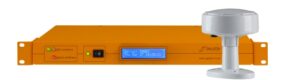
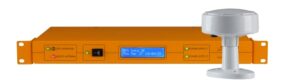
These GPS signals can also be received by a GPS NTP time server. Just as MSF or other radio signal time servers receive the external signal from the Anthorn transmitter, GPS time servers can receive this accurate and external signal from the satellites.

Unlike the radio broadcasts, GPS should never go down although it can sometimes be impractical to receive the signal as a GPS antenna needs a clear view of the sky and therefore should preferably be on the roof.

For those wanting to make doubly sure there is never a period when a signal is not being received by the NTP server, a dual time server can be used. These pick up both radio and GPS transmissions and the onboard NTP daemon calculates the most accurate time from them both.

The Vulnerability of GPS

Wednesday, March 3rd, 2010

An increase in GPS ‘attacks’ has been causing some concern amongst the scientific community.  GPS, whilst a highly accurate and reliable system of transmitting time and positing information, relies on very weak signals that are being hampered by interference from the Earth.

Both unintentional interference such as from pirate radio stations or intentional deliberate ‘jamming’ by criminals is still rare but as technology that can hamper GPS signals becomes more readily available, the situation is expected to get worse.

And while the effects of signal failure of the GPS system may have obvious results for people who use it for navigation (ending up in the wrong location or getting lost) it could have more serious and profound repercussions for the technologies that rely on GPS for time signals.

As so many technologies now rely on GPS timing signals from telephone networks, the internet, banking and traffic lights and even our power grid any signal failure no matter how briefly, could cause serious problems.

The main problem with the GPS signal is that it is very weak and as it comes from space bound satellites, little can be done to boost the signal so any similar frequency being broadcast in a local area can easily drown out GPS.

However, GPS is not the only accurate and secure method of receiving the time from an atomic clock source. Many national physics laboratories from across the globe broadcast atomic clock signals via radio waves (usually long wave). In the USA these signals are broadcast by NIST (National Institute for Standards and Time (known as WWVB) whilst in the UK, it’s MSF signal is broadcast by NPL (National Physical Laboratory).

Dual time servers that can receive both signals are available and are a safer bet for any high technology company that can’t afford to risk losing a time signal.

Network Time Protocol and Computer Time Synchronization

Tuesday, February 23rd, 2010

Ask any network administrator or IT engineer and ask them how important network time synchronization is and you’ll normally get the same answer – very.

Time is used in almost all aspects of computing for logging when events have happened. In fact timestamps are the only reference a computer can use to keep tracks of tasks it has done and those that it has yet to do.

When networks are unsynchronized the result can be a real headache for anybody tasked with debugging them. Data can be often lost, applications fail to commence, error logging is next to impossible, not to mention the security vulnerabilities that can result if there is no synchronized network time.

NTP (Network Time Protocol) is the leading time synchronisation application having been around since the 1980’s. It has been constantly developed and is used by virtually every computer network that requires accurate time.

Most operating systems have a version of NTP already installed and using it to synchronise a single computer is relatively straight forward by using the options in the clock settings or task bar.

However, by using the inbuilt NTP application or daemon on a computer will result in the device using a source of internet time as a timing reference. This is all well and good for single desk top machines but on a network a more secure solution is required.

It is vital on any computer network that there are no vulnerabilities in the firewall which can lead to attacks from malicious users. Keeping a port open to communicate with an internet timing source is one method an attacker can use to enter a network.

Fortunately there are alternatives to using the internet as a timing source. Atomic clock time signals can be received using long wave radio or GPS transmissions.

Dedicated NTP time server devices are available that make the process of time synchronisation extremely easy as the NTP servers receives the time (externally to the firewall) and can then distribute to all machines on a network – this is done securely and accurately with most networks synchronised to an NTP server working to within a few milliseconds of each other.

Choosing a Time Server for your Network

Monday, February 1st, 2010

Any network administrator will tell you how important time synchronization is for a modern computer network. Computers rely on the time for nearly everything, especially in today’s age of online trading and global communication where accuracy is essential.

Failing to ensure that computers are accurately synced together could lead to all manner of problems: data loss, security vulnerabilities, unable to conduct time sensitive transactions and difficulties debugging can all be caused by a lack of, or not adequate enough, time synchronization.

But ensuring every computer on a network has the exact same time is simple thanks to two technologies: the atomic clock and the NTP server (Network Time Protocol).

Atomic clocks are extremely accurate chronometers. They can keep time and not drift by as much of a second in thousands of years and it is this accuracy that has made possible technologies and applications such as satellite navigation, online trading and GPS.

Time synchronization for computer networks is controlled by the network time server, commonly referred to as the NTP server after the time synchronization protocol they use, Network Time Protocol.
When it comes to choosing a time server, there are really only two real type - the radio reference NTP time server and the GPS NTP time server.

Radio reference time servers receive the time from long wave transmission broadcast by physics laboratories like NIST in North America or NPL in the UK. These transmissions can often be picked up throughout the country of origin (and beyond) although local topography and interference from other electrical devices can interfere with the signal.

GPS time servers, on the other hand, use the satellite navigation signal transmitted from GPS satellites. The GPS transmissions are generated by atomic clocks onboard the satellites so they are a highly accurate source of time just like the atomic clock generated time broadcast by the physics laboratories.

Apart from the disadvantage of having to have a roof top antenna (GPS works by line of sight so a clear view of the sky is essential), GPS is obtainable literally everywhere on the planet.

As both types of time server can provide an accurate source of reliable time the decision of which type of time server should be based on the availability of long wave signals or whether it is possible to install a rooftop GPS antenna.

Using GPS as a source of Accurate Time

Thursday, January 28th, 2010

The Global Positioning System (GPS) is an increasingly popular tool, used throughout the world as a source of wayfinding and navigation. However, there is much more to the GPS network than just satellite navigation as the transmissions broadcast by the GPS satellites can also be used as a highly accurate source of time.

GPS satellites are actually just orbiting clocks as each one contains atomic clocks that generate a time signal. It is the time signal that is broadcast by the GPS satellites that satellite navigation receivers in cars and planes use to work out distance and position.

Positioning is only possible because thee time signals are so accurate. Vehicle sat navs for instance use the signals from four orbiting satellites and triangulate the information to work out the position. However, if there is just one second inaccuracy with one of the time signals then the positing information could be thousands of miles out – proving useless.

It is testament to the accuracy of atomic clocks used to generate GPS signals that currently a GPS receiver can work out its position on earth to within five metres.

Because GPS satellites are so accurate, they make an ideal source of time to synchronise a computer network to. Strictly speaking GPS time differs from the international timescale UTC (coordinated Universal Time) as UTC has had additional leap seconds added to it to ensure parity with the earth’s rotation meaning it is exactly 18 seconds ahead of GPS but is easily converted by NTP the time synchronisation protocol (Network Time Protocol).

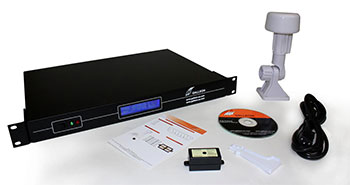
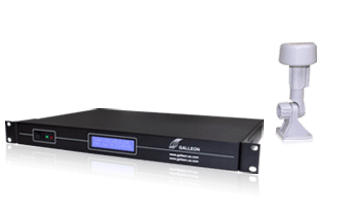
GPS time servers receive the GPS time signal via a GPS antenna which has to be placed on the roof to receive the line of sight transmissions. Once the GPS signal is received the NTP GPS time server will distribute the signal to all devices on the NTP network and corrects any drift on individual machines.

GPS time servers are dedicated easy to use devices and can ensure millisecond accuracy to UTC without any of the security risks involved in using an internet time source.

MSF Outages for 2010

Wednesday, January 20th, 2010

Users of the National Physical Laboratory’s (NPL) MSF time and frequency signal are probably aware that the signal is occasionally taken off-air for scheduled maintenance.

NPL have published there scheduled maintenance for 2010 where the signal will be temporarily taken off-air. Usually the scheduled downtimes lasts for less than four hours but users need to be aware that while NPL and VT Communications, who service the antenna, make every effort to ensure the transmitter is off for a brief amount of time as possible, there can be delays.

And while NPL like to ensure all users of the MSF signal have advanced warning of possible outages, emergency repairs and other issues may lead to unscheduled outages. Any user receiving problems receiving the MSF signal should check the NPL website in case of unscheduled maintenance before contacting your time server vendor.

The dates and times of the scheduled maintenance periods for 2010 are as follows:

* 11 March 2010 from 10:00 UTC to 14:00 UTC

* 10 June 2010 from 10:00 BST to 14:00 BST (UTC + 1 hr)

* 9 September 2010 from 10:00 BST to 14:00 BST (UTC + 1 hr)

* 9 December 2010 from 10:00 UTC to 14:00 UTC

As these scheduled outages should take no longer than four hours, users of MSF referenced time servers should not notice any drop off in accuracy of their network as their shouldn’t be enough time for any device to drift.

However, for those users concerned about accuracy or require a NTP time server (Network Time Server) that doesn’t succumb to regular outages, they may wish to consider investing in a GPS time server.

GPS time servers receive the time from the orbiting navigational satellites. As these are available anywhere on the globe and the signals are never down for outages they can provide a constant accurate time signal (GPS time is not the same as UTC but is easily converted by NTP as it is exactly 17 seconds behind due to leap seconds being added to UTC and not GPS).

Why a GPS Time Server is the Number One Choice for Time Synchronization

Monday, January 18th, 2010

When it comes to synchronizing a computer network there are several choice to ensure each device is running the same time. NTP (Network Time Protocol) is the preferred choice of time synchronization protocols but there are a multitude of methods in how NTP receives the time.

The NTP Daemon is installed on most operating systems such as windows and applications such as Windows Time are quite capable of receiving a source of UTC time (Coordinated Universal Time) from across the internet.

UTC time is the preferred time source used by computer networks as it is kept true by atomic clocks. UTC, as the name suggests, is also universal and is used by computer networks all over the world as a source to synchronize too.

However, internet sources of UTC are to recommended for any organisation where security and accuracy are a concern. Not only can the distant from host (internet time server) to the client (your computer network) can never be accurately measured leading to a drop in precision. Furthermore, any source of internet time will need access through the firewall (usually through the UDP 123 port). And by leaving this port open, malicious users and hackers can take advantage and gain access to the system.

Dedicated NTP time servers are a better solution as they receive the time from an external source. There are really two types of NTP server, the radio reference time server and the GPS time server.
Radio reference time servers use signals broadcast by places like NPL (National Physical Laboratory in the UK) or NIST (National Institute of Standards and Time). While these signals are extremely accurate, precise and secure they are affected by regular maintenance on the transmitters that broadcast the signal. Also being long wave they are vulnerable to local interference.

GPS time servers on the other hand receive the time directly from GPS satellites. This GPS time is easily converted to UTC by NTP (GPS time is UTC – 17 seconds exactly as no leap seconds have been added.) As the GPS signal is available everywhere on the earth 24 hours a day, 365 days a week, there is never a risk of a loss of signal.
A single dedicated GPS time server can synchronize a computer network of hundreds, and even thousands of machines to within a few of milliseconds of UTC time.