Archive for the ‘GPS’ Category

Which time signal? GPS or WWVB/MSF

Thursday, September 24th, 2009

Dedicated NTP time server devices are the easiest, most accurate, reliable and secure method of receiving a source of UTC time (Coordinated Universal Time) for synchronizing a computer network.

NTP servers (Network Time Protocol) operate outside the firewall and are not reliant on the Internet which means they are highly secure and not vulnerable to malicious users who, in the case of Internet time sources can use the NTP client signals as a method of accessing the network or penetrating the firewall.

A dedicated NTP server will also receive it’s time code direct from an atomic clock, this makes it a stratum 1 time server as opposed to online time servers which are stratum 2 time servers, that is they get the time from a stratum 1 server and so are not as accurate.

In using a NTP time server there is only really one decision to make and that is how the time signal is to be received and for this there is only two choices:

The first is to make use of the time standard radio transmissions broadcast by national physics laboratories such as NIST in the USA or the UK’s NPL. These signals (WWVB in the US, MSF in the UK) are limited in range although the USA signal is available in most parts of Canada and Alaska. However, they are vulnerable to local interference and topography as other long wave radio signals are.

The alternative to the WWVB/MSF signal is to utilise the GPS satellite network (Global Positioning System). Atomic clocks are used by GPS satellites as the basis for navigational information used by satellite receivers. These atomic clocks can be used by using a NTP time server fitted with a GPS antenna.

Whilst the GPS time signal is strictly speaking not UTC- it is 17 seconds behind as leap seconds have never been added to GPS time (as the satellites are unreachable) but NTP can account for this (by simply adding 17 whole seconds). The advantage of GPS is that it is available anywhere on the planet just as long as the GPS antenna has a clear view of the sky.

Duel systems that can utilise both types of signal are also available.

Time Synchronization Using the GPS Network

Monday, July 6th, 2009

The GPS (Global Positioning System) systems has revolutionized navigation for pilots, mariners and drivers a like. Nearly every brand new car is sold with an inbuilt satellite navigation system already installed and similar detachable devices continue to sell in their millions.

Yet the GPS system is a multi purpose tool thanks mainly to the technology it employs to provide navigational information. Each GPS satellite contains an atomic clock which signal is used to triangulate positioning information.

GPS has been around since the late 1970’s but it was only in 1983 that is stopped from being purely a tool of the military and was opened up to allow free commercial access following an accidental shooting down of a passenger airliner.

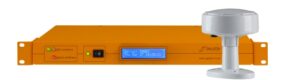
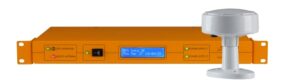
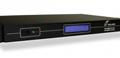
To utilise the GPS system as a timing reference, a GPS clock or GPS time server is required. These devices usually rely on the time protocol NTP (Network Time Protocol) to distribute the GPS time signal that arrives via the GPS antenna.

GPS time is not the same as UTC (Coordinated Universal Time) which is normally used  NTP for time synchronization via radio transmissions or the internet. GPS time did originally match UTC in 1980 during its inception but sine that time there have been leap seconds added to UTC to counteract the variations of the earth’s rotation, however the on-board satellite clocks are corrected to compensate for the difference between GPS time and UTC, which is 17seconds, as of 2009.

By utilising a GPS time server an entire computer network can be synchronized to within a few milliseconds of UTC ensuring that all computers are safe, secure and able to deal effectively with time sensitive transactions.

A Guide to Using a GPS Clock

Wednesday, June 24th, 2009

The Global Positioning System much loved by drivers, pilots and sea-farers as a method of finding location offers much more than just satellite navigation information. The GPS system work by using atomic clocks that broadcast signals that are then triangulated by the computer in a satellite navigation system.

Because these atomic clocks are highly accurate and don’t drift by as much as a second even in a million years, they can be utilised as a method of synchronizing computer systems. GPS time, the time relayed by the GPS atomic clocks, is not strictly speaking the same as UTC (Coordinated Universal Time), the world’s global timescale, but as they are both based on International Atomic Time it can easily be converted. (GPS time is actual 17 seconds slower than UTC as there have been 17 leap seconds added to the global timescale since the GPS satellites where sent in to orbit).

A GPS clock is a device that receives the GPS signal and then translates it into the time. Most GPS clocks are dedicated time servers too as there is little point in receiving the exact time if you are to do nothing with it. GPS time servers use the protocol NTP (Network Time Protocol) which is one of the internet’s oldest protocols and designed to distribute timing information across a network.

A GPS clock, or GPS time server works by receiving a signal directly from the satellite. This unfortunately means the GPS antenna has to have a clear view of the sky to receive a signal. The time is then distributed from the time server to all devices on the network. The time on each device is regularly checked by NTP and if differs to the time from the GPS clock then it is adjusted.

Setting up a GPS clock for time synchronization is relatively easy. The time server (GPS clock) are often designed to fill a 1U space on a server rack. This is connected to the GPS antenna (usually on the roof) via a length of coax cable. The server is connected to the network and once it has locked on to the GPS system it can be set to begin synchronizing the network.

What Atomic Clocks Have Done for Us

Monday, June 22nd, 2009

Atomic clocks, as many people know they are highly accurate devices but the atomic clock is one of the most important inventions of the last 50 years and has given rise to numerous technologies and applications that have completely revolutionised our lives.

You may think how a clock could be so important regardless of how accurate it is, however, when you consider that precision, that a modern atomic clock doesn’t lose a second in time in tens of millions of years when compared to the next best chronometers – electronic clocks – that can lose a second a day you get to realise just how accurate they are.

In fact, atomic clocks have been crucial in identifying the smaller nuances of our world and the universe. For instance we have for millennia assumed that a day is 24 hours long but in fact, thanks to atomic clock technology we now know that the length of each day slightly differs and in general the earth’s rotation is slowing down.

Atomic clocks have also been used to accurately measure the earth’s gravity and have even proved Einstein’s theories of how gravity can slow time by accurately measuring the difference in the passing of time at each subsequent inch above the earth’s surface. This has been crucial when it comes to placing satellites in orbit as time passes quicker that high above the earth than it does on the ground.

Atomic clocks also form the basis for many of the technologies that we employ in our day to day lives. Satellite navigation devices rely on atomic clocks in GPS satellites. Not only do they have to take into account the differences in time above the orbit but it as sat navs use the time sent from the satellites to triangulate positions, a one second inaccuracy would see navigational information inaccurate by thousands of miles (as light travels nearly 180,000 miles every second).

Atomic clocks are also the basis for the world’s global timescale – UTC (Coordinated Universal Time), which is utilised by computer networks throughout the world. Time synchronization to an atomic clock and UTC is relatively straight forward with a NTP time server. These use the time signal from the GPS system or special transmissions broadcast from large scale physics labs and then distribute it across the internet using the time protocol NTP.

The Sat Nav – How it Works

Saturday, June 20th, 2009

The ‘sat-nav’ has revolutionised the way we travel. From taxi drivers, couriers and the family car to airliners and tanks, satellite navigation devices are now fitted in almost every vehicle as it comes off the production line. While GPS systems certainly have their flaws, they have several uses too. Navigation is just one of the main uses of GPS but it is also employed as a source of time for GPS NTP time servers.

Being able to pin point locations from space has saved countless lives as well as making travelling to unfamiliar destinations trouble free. Satellite navigation relies on a constellation of satellites known as GNSS (Global Navigational Satellite Systems). Currently there is only one fully functioning GNSS in the world which is the Global Positioning System (GPS).

GPS is owned and run by the US military. The satellites broadcast two signals, one for the American military and one for civilian use. Originally, GPS was meant solely for the US armed forces but following an accidental shooting down of an airliner, the then President of the US Ronald Reagan opened the GPS system to the world’s population to prevent future tragedies.

GPS has a constellation of over 30 satellites. At any one time at least four of these satellites are overhead, which is the minimum number required for accurate navigation.

The GPS satellites each have onboard an atomic clock. Atomic clocks use the resonance of an atom (the vibration or frequency at particular energy states) which makes them highly accurate, not losing as much as a second in time over a million years. This incredible precision is what makes satellite navigation possible.

The satellites broadcast a signal from the onboard clock. This signal consists of the time and the position of the satellite. This signal is beamed back to earth where your car’s sat nav retrieves it. By working out how long this signal took to reach the car and triangulating four of these signals the computer in your GPS system will work out exactly where you are on the face of the world.  (Four signals are used because of elevation changes – on a ‘flat’ earth only three would be required).

GPS systems
can only work because of the highly precise accuracy of the atomic clocks. Because the signals are broadcast at the speed of light and accuracy of even a millisecond (a thousandth of a second) could alter the positioning calculations by 100 kilometres as light can travel nearly 100,00km each and every second –currently GPS systems are accurate to about five metres.

The atomic clocks onboard GPS systems are not just used for navigation either. Because atomic clocks are so accurate GPS makes a good source of time. NTP time servers use GPS signals to synchronize computers networks to. A NTP GPS server will receive the time signal from the GPS satellite then convert it to UTC (Coordinated Universal Time) and distribute it to all devices on a network providing highly accurate time synchronization.

Reported GPS Fears Should Not Affect Time Synchonisation

Wednesday, May 27th, 2009

Following recent media reports on the lack of investment in the USA’s Global Navigation Satellite System – GPS (Global Positioning System) and the potential failure of navigational receivers in recent years, time synchronisation specialists, Galleon Systems, would like to ensure all their customers that any failure of the GPS network will not affect current GPS NTP time servers.

Recent media reports following a study by the US government’s accountability office (GAO), that concluded mismanagement and a lack of investment meant some the current number of 31 operational satellites may fall to below 24 at times in 2011 and 2012 which would hamper its accuracy.

However, the UK’s National Physical Laboratory are confident that any potential problems of the GPS navigation facilities will not affect timing information utilised by GPS NTP servers.

A spokesman for the UK’s National Physical Laboratory confirmed that timing information should be unaffected by any potential future satellite failure.

“There is estimated to be a 20% risk that in 2011-2012 the number of satellites in the GPS constellation could drop below 24 at times.

“If that were to happen, there could be a slight reduction in the position accuracy of GPS receivers at some periods, and in particular they might take longer to acquire a fix in some locations when first powered up. However, even then the effect would be a degradation of performance, rather than complete failure to operate.

“A GPS timing receiver is unlikely to be affected significantly since, once it has determined its position when turned on, every satellite it observes provides it with useful timing information. A small reduction in the number of satellites in view should not degrade its performance much.”

MSF Outage 11 June – NPL Maintenance

Tuesday, May 26th, 2009

The UK’s MSF signal broadcast from Anthorn, Cumbria and utilised by UK NTP server users is be turned off for a four hour period on 11 June for scheduled maintenance. The MSF 60 kHz time and frequency standard will be off between 10.00 and 14:00 BST (9:00 – 13:00 UTC).

Users of NTP time servers that utilise the MSF signal should be aware of the outage but shouldn’t panic. Most network time servers that use the Anthorn system should still function adequately and the lack of a timing signal for four hours should not create any synchronisation problems or clock drift.

However, any testing of time servers that utilise MSF should be conducted before or after the scheduled outage. Further information is available from NPL.

Any network time server users that require ultra-precise precision or are feel temporary loss of this signal could cause repercussions in their time synchronisation should seriously consider utilising the GPS signal as an additional means of receiving a time signal.

GPS is available literally anywhere on the planet (as long as there is a good clear view of the sky) and is never down due to outages.

For further information on GPS NTP server can be found here.

Computers, Communications, Atomic Clocks and the NTP Server

Friday, May 22nd, 2009

Time synchronisation on computer networks is often conducted by the NTP server. NTP time servers do not generate any timing information themselves but are merely methods of communicating with an atomic clock.

The precision of an atomic clock is widely talked about. Many of them can maintain time to nanosecond precision (billionths of a second) which means they won’t drift beyond a second in accuracy in hundreds of millions of years.

However, what is less understood and talked about is why we need to have such accurate clocks, after-all the traditional methods of keeping time such as mechanical clocks, electronic watches and using the rotation of the Earth to keep track of the days has proved reliable for thousands of years.

However, the development of digital technology over recent years has been nearly solely reliant on the ultra high precision of an atomic clock. One of the most widely used applications for atomic clocks is in the communications industry.

For several years now telephone calls taken in most industrialized countries are now transmitted digitally. However, most telephone wires are simply copper cables (although many telephone companies are now investing in fibre optics) which can only transmit one packet of information at a time. Yet telephone wires have to carry many conversations down the same wires at the same time.

This is achieved by computers at the exchanges switching from one conversation to another thousands of times every second and all this has to be controlled by nano-second precision otherwise  the calls will become out of step and get jumbled – hence the need for. Atomic clocks; mobile phones, digital TV and Internet communications use similar technology.

The accuracy of atomic clocks is also the basis for satellite navigation such as GPS (global positioning system). GPS satellites contain an onboard atomic clock that generates and transmits a time signal. A GPS receiver will receive four of theses signals and use the timing information to work out how long the transmissions took to reach it and therefore the position of the receiver on Earth.

Current GPS systems are accurate to a few metres but to give an indication of how vital precision is, a one second drift of a GPS clock could see the GPS receiver be inaccurate by over 100 thousand miles (because of the  huge distances light and therefore transmissions take in one second).

Many of these technologies that depend on atomic clocks utilise NTP servers as the preferred way to communicate with atomic clocks making the NTP time server one of the most crucial pieces of equipment in the communication industries.

The Concept of Time

Monday, May 11th, 2009

Time is something that we are all familiar with, it governs our lives even more so than money and we are constantly ‘at war’ with time as we battle to conduct our daily tasks before it runs out.

Yet when we start to examine time we discover that the concept of time we begin to realise that a non-ending linear distance between different events that we call time is purely a human invention.

Of course time exists but it certainly doesn’t follow the rules that the human concept of time does. It is not never ending or constant and changes and warps depending on speed of observers and the pull of gravity. In fact it was Einstein’s theories on relativity that gave human kind its first glimpse as to what time really is and how it affects our daily lives.

Einstein described a four-dimensional space-time, where time and space are inextricably woven together. This space-time gets warped and bent by gravity slowing time (or our perception of it). Einstein also, he suggested that the speed of light was the only constant in the universe and time altered depending on the relative speed to it.

When it comes to keeping track of time, Einstein’s theories can hamper any attempts at chronology. If both gravity and relative speed can affect time then it becomes difficult to measure time accurately.

We long ago abandoned the idea of using the celestial bodies and Earth’s rotation as a reference for our timekeeping as it was recognised in the early twentieth century that Earth’s rotation wasn’t at all accurate or reliable. Instead, we have depended n the oscillations of atoms to keep track of time. Atomic clocks measure atomic ticks of particular atoms and our concept of time is based on these ticks with every second being equal to over 9 billion oscillation of the caesium atom.

Even though we now base time on atomic oscillations, technologies such as GPS satellites (Global Positioning System) still have to counter the effects of lower gravity. In fact the effects of time can be monitored so accurately thanks to atomic clocks that those at different altitudes above sea level run at slightly differing speeds which has to be compensated for.

Atomic clocks can also be used to synchronise a computer network ensuring that they are running as accurately as possible. Most NTP time servers operate by utilising and distributing the time signal broadcast by an atomic clock (either through GPS or long wave) using the protocol NTP (Network Time Protocol).

Common GPS Queries

Wednesday, April 29th, 2009

Is the GPS time signal the same as the GPS positioning signal?

Yes. The signals that are broadcast by GPS satellites contain time information and the position of the satellite it came from (and its velocity). The timing information is generated by an onboard caesium atomic clock. It is this information used by satellite navigation devices (sat navs) that enables global positioning. Sat Navs use these signals from multiple satellites to triangulate a position.

How accurate is GPS positioning?

Because the time signal generated by GPS comes from an atomic clock it is accurate to within 16 nanoseconds (16 billionths of a second). As light travels nearly 186 000 miles in a second this equates to around 16 feet (5+metres) which means a GPS positioning system is usually accurate to this much.

Is GPS time the same as UTC?

No. GPS time, like UTC (Coordinated Universal Time)is based on International Atomic Time (TAI) – the time told by atomic clocks. However as the GPS system was developed several decades ago it is now 14 seconds (and soon to be 15) behind UTC because it has missed out on the Leap Seconds added to UTC to calibrate for the Earth’s slowing rotation.

How can I use GPS as a source of UTC then?

Fortunately a GPS time server will convert GPS to the current UTC time, which as od 1 January 2009 will mean it has to add exactly 15 seconds.