Using Internet Time for Computer Synchronization

Ensuring your network is synchronized is a vital part of modern computing. Failure to do so, and having different machines telling different times is a recipe for disaster and can cause untold problems, not to mention making it almost impossible to debug or log errors.

And it is not just your own network you need to synchronize to either. With so many networks talking to each other, it is important that all networks synchronize to the same time-scale.

UTC (Coordinated Universal Time) is just such a global timescale. It is controlled by an international constellation of atomic clocks and enables computers all over the world to talk to each other in perfect synchronicity.

But how do you sync to UTC?

The internet is awash with sources of internet time. Most modern operating systems, especially in the Windows flavour, are set up to do this automatically (just by clicking the time/date tab on the clock menu). The computer will then regularly check the time server (usually at Microsoft or NIST, although others can be used) and adjust the computer to ensure its time matches.

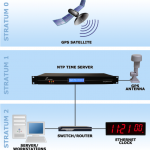
Most internet time servers are known as stratum 2 devices. This means they take the time from another device but where does that get the time from?

NTP time servers

The answer is that somewhere on the stratum tree there will be a stratum 1 device. This will be a time server that receives the time direct from an atomic clock source. Often this is by GPS but there are radio referenced alternatives in several countries. These stratum 1 NTP (Network Time Protocol) time servers then provide the stratum 2 devices with the correct time – and its these devices we get our internet time from.

Drawbacks to Internet time

There are several drawbacks to relying on the Internet for time synchronisation. Accuracy is one consideration. Normally, a stratum 2 device will provide ample enough precision for most networks; however, for some users who require high levels of accuracy or deal in a lot of time sensitive transactions a stratum 2 time server may not be accurate enough.

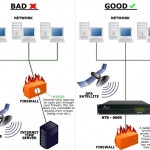
Another problem with internet time servers is that they require an open port in the firewall. Keeping the NTP access on UDP port 123 open all the time could lead to security issues, especially as internet time sources can’t be authenticated or guaranteed.

Using a Stratum 1 NTP Time server

Stratum 1 NTP time servers are easily installed on most networks. Not only will they provide a higher accurate source of time but as they receive the time externally (from GPS or radio) they are highly secure and can’t be hijacked by malicious users or viral software.

MSF Downtime – No Signal 26/27 July

The UK’s time and frequency signal MSF, provided by the National Physical Laboratory out of Cumbria, will be down for essential maintenance on 26 and 27 July.

The unplanned downtime is to allow essential maintenance to be carried out in safety. The MSF transmitter will stop broadcasting the MSF signal on 26 and 27 July between 08.00 and 20.00 (BST – 07:00 GMT/UTC) although it is possible the maintenance may be finished ahead of schedule in which case the signal will be turned on earlier.

Future maintenance is scheduled for the following times when the signal will also be turned off:

• 9 September 2010 from 10:00 BST to 14:00 BST
• 9 December 2010 from 10:00 UTC to 14:00 UTC
• 10 March 2011 from 10:00 UTC to 14:00 UTC

Problems for Time Synchronisation

Generally, most NTP time servers should be able to maintain a stable time during these brief outages and users of MSF time synchronisation devices should not experience any difficulties with the lack of MSF signal.

However, those users who require high levels of accuracy and reliability and find the MSF outages affect them should perhaps look to a GPS NTP server.

GPS time servers receive their time signals from the GPS network which is available 24 hours a day, 365 days a year and never experiences any outages.

MSF Downtime – No Signal 26/27 July

NTP Servers versus Internet Time – What’s the best method for Accurate Time?

Accurate and reliable time is highly important and as networks and the internet gets faster and faster – accuracy becomes even more essential.

Computers internal clock systems are nowhere near accurate enough for many networked tasks. As simple quartz chronometers they will drift, by as a much as a second which perhaps wouldn’t be a problem if it wasn’t for the fact that all the clocks on the network may drift at different rates.

And as the world becomes more global, ensuring computer networks can talk to each other is also important meaning that synchronisation to the global timescale UTC (Coordinated Universal Time) is now a prerequisite for most networks.

Methods of Synchronisation

There are currently, only two methods for getting truly accurate and reliable time:

  • Use of an internet based time server from places like NIST (National Institute of Standards and Time) or Microsoft.
  • Use of a dedicated NTP time server – that receives external time sources such as from GPS

There are advantages and disadvantages to both types of sources – but which method is best?

Internet Time

Internet time has one great advantage – it is often free. However there are disadvantages to using an internet tie source. The first is distance. Distance across the internet can have a dramatic effect and as the internet gets quicker the distance has an even bigger effect meaning that accuracy become more tenuous.

Another disadvantage of internet time is the lack of authentication and the security risk it poses. Authentication is what the time protocol NTP (Network Time Protocol) uses to establish the true identity of a time source.

Furthermore, an internet time source can only be accessed through a network firewall so a UDP port has to be kept open providing a possible entrance for software nasties or malicious users.

NTP Time Server

NTP time servers on the other hand are dedicated devices. They retrieve a source of UTC externally to the firewall from either GPS or a long wave radio transmission. These come direct from atomic clocks (in the cased of GPS the atomic clock is onboard the satellite) and so can’t be hijacked by malicious users or viruses.

NTP servers are also far more accurate and are not impinged by distance meaning that a network can have millisecond accuracy all the time.

Time to get accurate – Atomic clock time servers for computer networks

Accurate and precise time is increasingly becoming a necessity for computer systems. From corporate networks to public service technologies such as ATMs, traffic lights or CCTV cameras – precise time is what keeps them ticking.

Inaccurate or unsynchronised time is the root cause for many technology breakdowns and failures.  For instance, failing to synchronize a traffic lights system can lead to all sorts of confusion of the lights change at the wrong time – and the consequences for systems belonging to industries such as air traffic control could be even worse.

And even a standard computer network such as those used in most offices requires accurate synchronisation to prevent errors, enable debugging and to ensure the system is secure.

Most system administrators are now aware of the importance of accurate and precise time synchronisation but getting a source of accurate time is often where many people make mistakes.

Many network administrators are aware of the time protocol NTP (Network Time Protocol) which is used to ensure accurate synchronisation between computers.

However, many administrators make the mistake of using a source of time from across the internet to distribute with NTP – a common pitfall that can have disastrous consequences.

The internet is not the best source of tine. While it is true, many online NTP servers are available as a source of atomic time or UTC (Coordinated Universal Time) but are they accurate. The truth is it is almost impossible to know. Internet time sources can be affected by the distance of the client (the network) from the time source – it also can’t be authenticated by NTP.

Even more important, internet time sources operate through the firewall which can allow the time signal to be hijacked by malicious programs.

The only secure and accurate method of synchronising a computer network or other technology system is to use an NTP server. These devices receive an external atomic clock time signal often by GPS or even by radio transmissions.

These signals are come direct from atomic clocks so are highly accurate they also can’t be hijacked as they are not connected to the internet.

The World Cup and the NTP Server

As half the world is engrossed in the four yearly football tournament, it is a good opportunity to highlight the importance of accurate time and how it enables the entire world to watch events such as the Fifa World Cup.

Many of us have been glued to the love football coverage that is being broadcast by a multitude of different broadcasters and TV companies to nearly all countries across the globe.

But nearly all the technologies that enable this mass global live transmission: from the communication satellites that beam the signal across the globe, to the receivers that distribute them to our dishes, cable boxes and aerials.

And with online broadcasting now part and parcel of the whole live sporting event package – accurate time is even more important.

NTP time servers

With signals being bounced from football stadiums to satellites and then to our homes, it is essential that all the technologies involved are synchronised as accurately as possible. Failure to do so could cause the signals to get lost, create interferences or cause a qhole host of other problems.

Most technologies rely on time servers to ensure accuracy and synchronisation. Most time synchronisation servers use the protocol NTP (Network Time Protocol) to distribute time across technology networks.

These devices use a single time source, often acquired from an external atomic clock that is used to set all system clocks on devices to.

Most modern computer networks have a NTP time server that controls the time. These devices are simple to set up and in a modern, global world, are a must have for anybody conscious about accuracy and security (Many security and malicious network attacks are caused due to a lack of synchronisation).

A single NTP time server can keep a network of hundreds and even thousands of machines accurate to within a few milliseconds to the world’s global timescale UTC (Coordinated Universal Time).

A New Slim 1U Rackmount Dual Time Server from Galleon Systems

Leading providers of time synchronisation equipment and Network Time Protocol Products, Galleon Systems, have released a compact new 1U rackmountable dual time server.

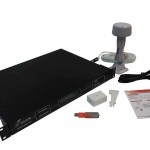
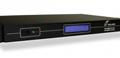
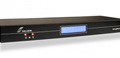
Galleon’s new NTS 6001 1U rackmountable NTP time server can receive atomic clock timing signals from both the Global Positioning System (GPS) and national time and frequency radio transmissions.

Designed to fit snugly into any server rack, the 1U NTS 6001 is a stratum 1 time server capable of symphonizing a network of hundred of machines to within a few
milliseconds of UTC (Coordinated Universal Time).

The NTS 6001 consists of both an integral GPS receiver that can simultaneously track up to 12 satellites, and a high gain radio receiver that can receive the MSF (UK), WWVB (USA) and DCF (Germany) radio transmissions.

The NTS- 6001 dual time server features:

  • NTP Version 4
  • Ethernet NTP output jitter typically within 50 microseconds of UTC.
  • High Reliability – solid state design and convection cooled
  • Easy to use – web based user interface for system configuration and management.
  • Free firmware upgrades.
  • LCD display
  • 3 Year Warranty.

The NTS 6001 is the latest in a long line of highly precise NTP time synchronisation devices from atomic clock experts Galleon Systems.

Manufactured in the UK, Galleon Systems have a wide range of other NTP and time synchronisation devices used worldwide by thousands of organizations who need accurate, reliable and precise time.

For more information please contact:
http://www.galsys.co.uk/
0121 608 4433
sales(at)galleonmail(dot)com

Ensure Accurate Time with an Atomic Wall Clock

Written By Richard Williams for Galleon Systems

Accuracy in timekeeping is forever becoming more important in the modern global economy. Industries and business around the globe are now often communicating with each despite the time zone differences.

There was a time when a few minutes here or there rarely mattered but now, knowing exactly what time it is has become more and more important as conference calls and over-the-internet webinars are often scheduled as part of regular business.

Global Timescale

Fortunately, to prevent the headache of working out all the different time-zones you may have to deal with, there is a global timescale that is now adopted by the global community. UTC (Coordinated Universal Time) is an atomic clock controlled time used globally and kept precise and accurate by physics laboratories around the world.

UTC enables accurate communication and forms and is used by many high end technologies to ensure accuracy such as the network time server (NTP server – Network Time Protocol). Often these devices receive the UTC time directly from atomic clocks thanks to radio broadcasts from people like NIST (USA’s National Institute for Standards and Time) and NPL (UK’s National Physical Laboratory)

Atomic Wall Clocks

And when it comes to people telling the time, these same radio signals can also be utilised by an atomic wall clock. Atomic wall clocks, despite what the name suggests, are not atomic clocks. In essence they are comprised of a standard clock device and a radio antenna and receive. The atomic clocks signals broadcast by the physics laboratories can be received and the clock regularly adjusts itself to ensure that the clock is accurate to UTC to the second.

Do I Really Need A NTP Server For Time Synchronisation?

Time synchronisation is a critical aspect to modern computing, especially when computers are on a network or need to communicate with other networked machines.

Timestamps are crucial for computers to acknowledge when an event occurred and it is the only information they have to ascertain if an event has occurred. Without accurate time stamps the consequences can include:

• Loss of data
• Difficult to log errors
• Difficult to debug
• Failure to save
• Time sensitive applications may fail

Modern operating systems like Windows 7 have automatic synchronisation software already installed. W32Time has been a part of Microsoft’s different generations of operating systems for some time but in Windows 7 it is set to be automatically on (Rather than the user having to set it) – synchronising your PC straight out of the box.

With such NTP (Network Time Protocol) based synchronisation available by using internet time servers (normally Microsoft and NIST) many people may wonder if a dedicated time server is still required.

Problems with Internet Time Servers

There are several drawbacks to using this Internet time as a source of UTC (Coordinated Universal Time – the global timescale often referred to as GMT).

The first and most important drawback to internet time servers is their location through the firewall. Having to rely on a source of time across the internet means keeping the TCP port open – a crucial security weakness that can be used by malicious users or bots.

Another downside to internet time servers is their lack of guaranteed accuracy. While places like NIST (National Institute for Standards and Time) and Microsoft have reliable and accurate time servers – the accuracy can be dependent on how far away you are peering from. And many other time servers available as a source of internet time are less reliable – and as NTP can’t authenticate a time signal from across the internet – it can be difficult to assess.

Benefits of an External NTP Server

Dedicated external NTP servers are far more secure. They receive their tie from GPS satellites of Long Wave transmissions so the signals can’t be intercepted by computer hackers or malicious software. Also, NTP can authenticate the signals ensuring you know where they are coming from and how accurate they are.

With time being so important on modern networked computers, taking a risk with internet time may cost a lot more than any minor investment in a dedicated NTP time server.

Competition for GPS Ever Closer

Written by Richard N Williams for Galleon Systems

Since its release to the civilian population the Global Positioning System (GPS) has greatly improved and enhanced our world. From satellite navigation to the precise time used by NTP servers (Network Time Protocol) and much or our modern world’s technology.

And GPS has for several years been the only Global Navigation Satellite Systems (GNSS) and is used the world over, however, times are now changing.

There are now three other GNSS systems on the horizon that will not only act as competition for GPS but will also increase its precision and accuracy.

Glonass is a Russian GNSS system that was developed during the Cold War. However, after the fall of the Soviet Union the system fell into disrepair but it has finally been revamped and is now back up and running.

The Glonass system is now being used as a navigational aid by Russian airlines and their emergency services with in-car GNSS receivers also being rolled out for the general population to use. And the Glonass system is also allowing time synchronisation using NTP time servers as it uses the same atomic clock technology as GPS.

And Glonass is not the only competition for GPS either. The European Galileo system is on track with the first satellites expected to be launched at the end of 2010 and the Chinese Compass system is also expected to be online soon which will make four fully operational GNSS systems orbiting above Earth’s orbit.

And this is good news for those interested in ultra high time synchronisation as the systems should all be interoperable meaning anyone looking to GNSS satellites can use multiple systems to ensure even greater accuracy.

It is expected that interoperable GNSS NTP time servers will soon be available to make use of these new technologies.

Understanding GPS Time in Relation to UTC

Accurate time is so important for modern computer systems that it is now unimaginable for any network administer to configure a computer system without any regard to synchronisation.

Ensuring all machines are running an accurate and precise time, and that the entire network is synchronised together, will prevent problems arising such as data loss, failure of time sensitive transactions and enable debugging and error management which can be near impossible on networks that lack synchronicity.

There are many sources of accurate time for use with NTP time servers (Network Time Protocol). NTP servers tend to use time that is controlled by atomic clocks to ensure accuracy, and there are advantages and disadvantages to each system.

Ideally as a source of time you want it to be a source of UTC (Coordinated Universal Time) as this is the international time standard as used by computer systems worldwide. But UTC is not always accessible but there is an alternative.

GPS time

GPS time is the time as relayed by the atomic clocks on board GPS satellites. These clocks form the basic technology for the Global Positioning System and their signals are what are used to work out positing information.

But GPS time signals can also provide an accurate source of time for computer networks – although strictly speaking GPS time does differ to UTC.

No Leap Seconds

GPS time is broadcast as an integer. The signal contains the number of seconds from when the GPS clocks were first turned on (January 1980).

Originally GPS time was set to UTC but since GPS satellite have been in space the last thirty years, unlike UTC, there has been no increase to account for leap seconds – so currently GPS is running exactly 17 seconds behind UTC.

Conversion

Whilst GPS time and UTC are not strictly the same as they were originally based on the same time and only the lack of leap seconds not added to GPS makes the difference, and as this is exact in seconds, conversion of GPS time is simple.

Many GPS NTP servers will convert GPS time to UTC time (and local time if you so wish) ensuring you can always have an accurate, stable, secure and reliable source of atomic clock based time.